
Benin has one of the most dynamic growth rates on the continent. In 2024, GDP grew by 7.5%, and the government aims to sustain this pace beyond 2026. To achieve this, one lever is central: solid infrastructure. Alongside the State, PORTEO Group plays a key role in modernising the country’s infrastructure, creating jobs and developing local industry.
Infrastructure serving development
The Beninese government’s Multi-Year Budget and Economic Programming Document (DPBEP 2026–2028) sets ambitious goals: supporting agricultural productivity, strengthening industrialisation and modernising transport networks. These pillars rest on one essential element: solid and accessible infrastructure.
This is precisely where PORTEO comes in. Present in Benin through its subsidiaries PORTEO BTP, Technic Béton and Gravel, the Group helps structure the economy by rehabilitating roads, producing materials locally and opening up rural areas.
Local jobs and skills
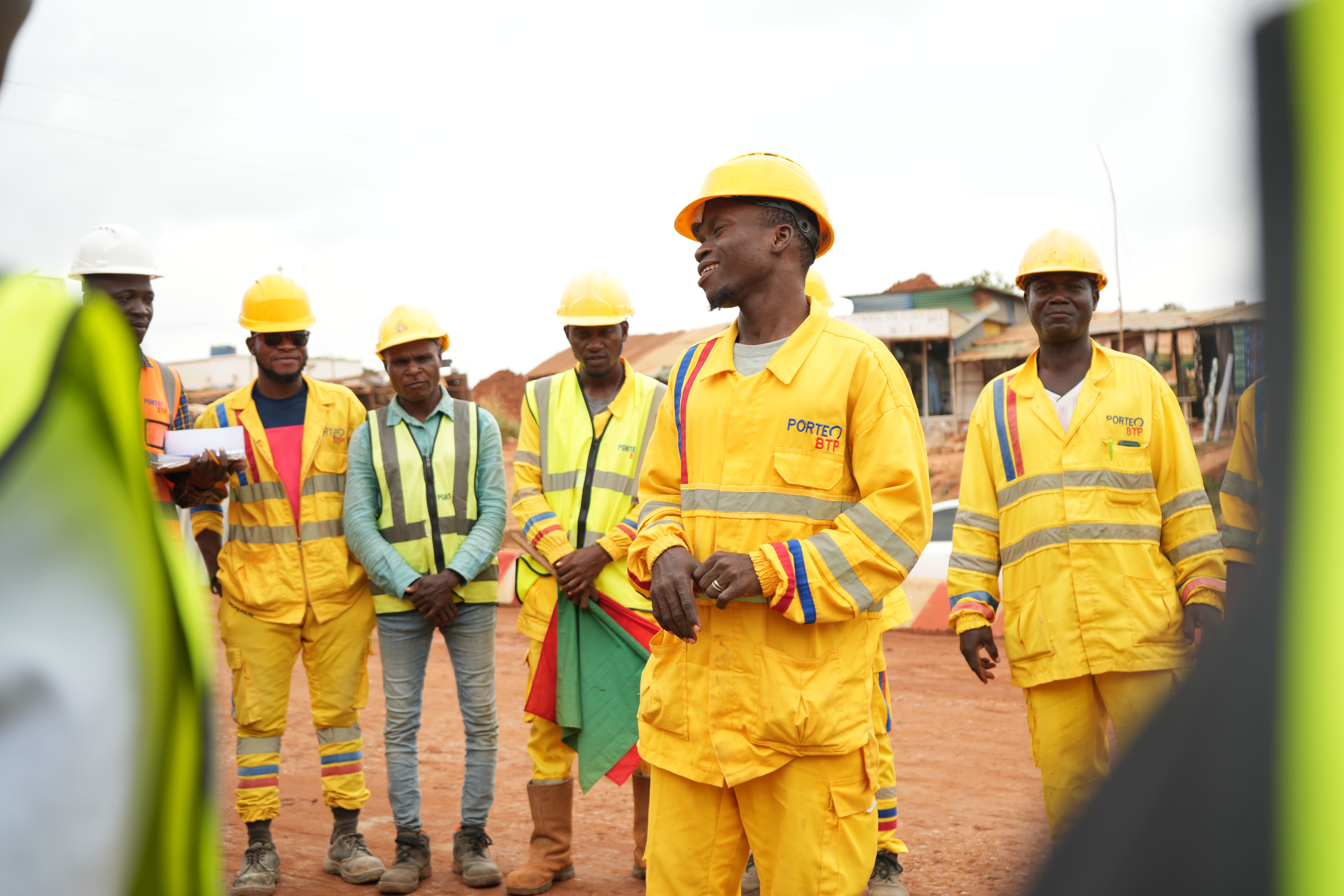
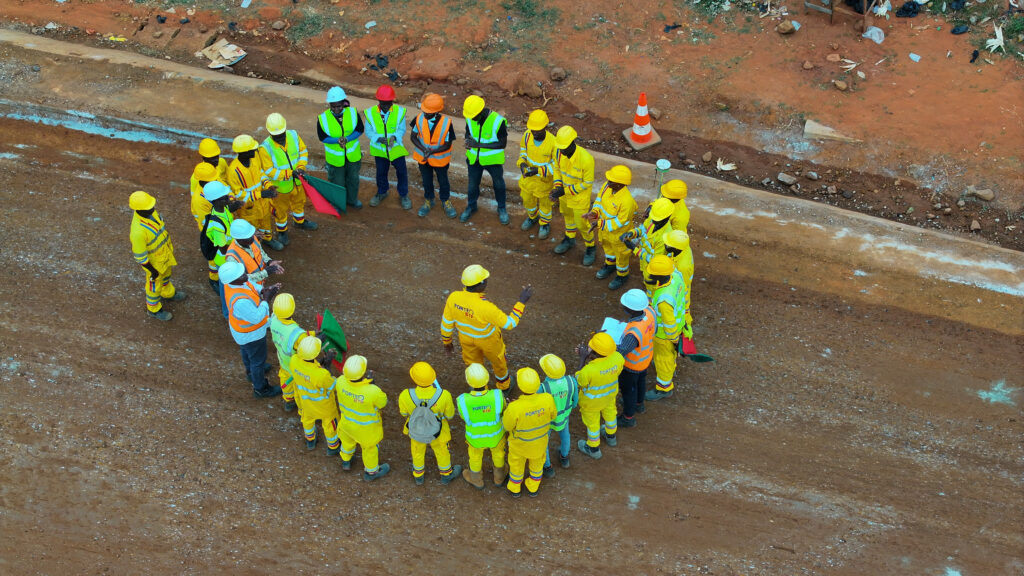
With more than 2,000 direct employees and over 50 small subcontracting companies, PORTEO does more than deliver projects: it creates a living economic fabric. Each project is also an opportunity for training and the transfer of know-how to local engineers and technicians.
According to the African Development Bank (2023), infrastructure is one of the largest sources of employment in Africa, capable of generating up to 40% additional jobs when it relies on local value chains. This is PORTEO’s approach: building roads, but also building careers.
Industrialisation as a lever for sovereignty
PORTEO’s industrial subsidiaries, Gravel Bénin for aggregates, Technic Béton for ready-mix concrete and B.STEEL BENIN for steel, aluminium and glass, help reduce dependence on imports. This strategy is essential: the World Bank (2022) points out that 70% of construction materials in West Africa are still imported, which increases costs and holds back competitiveness.
By investing in local plants, PORTEO not only helps stabilise prices but also strengthens Benin’s industrial sovereignty. Over time, this sovereignty can position the country as a regional exporter.
Roads to connect and integrate
The rehabilitation of 15 road sections around Abomey, Calavi, Allada, Lokossa and Parakou (356 km) and the future Porto-Novo bridge, designed to unlock the river potential of Greater Nokoué, show the concrete impact of these investments. Every road opens up a farming area, every bridge eases a logistics corridor, and every project brings Benin closer to its goal of becoming a connectivity hub in West Africa. According to the World Bank (2022), a 10% reduction in transport costs can increase regional trade by 25%.
An African vision of growth
For Hassan Dakhlallah, founder of PORTEO Group, the stakes go beyond national borders:
“Benin’s growth cannot be decreed, it has to be built. Road after road, project after project, we are helping to anchor a more integrated, more competitive and more sustainable economy.”
This vision echoes the calls of the AfDB and UNECA (2023) for local industrialisation and stronger regional integration.
PORTEO’s key contributions in Benin
- More than 2,000 direct employees and over 50 small subcontracting companies, with ongoing training.
- Local production of materials: aggregates (Gravel), concrete (Technic Béton), steel/aluminium/glass (B. STEEL).
- Flagship projects: 356 km of roads rehabilitated around Abomey, Calavi, Allada, Lokossa and Parakou; the future Porto-Novo bridge.
- Contribution to national objectives: growth > 7.5% per year (DPBEP 2026–2028).
By rooting itself at the heart of Benin’s development, PORTEO Group does more than build infrastructure: it helps establish a model of sustainable and sovereign growth, in which every road, every plant and every bridge becomes a foundation for the future of the country and the region.