
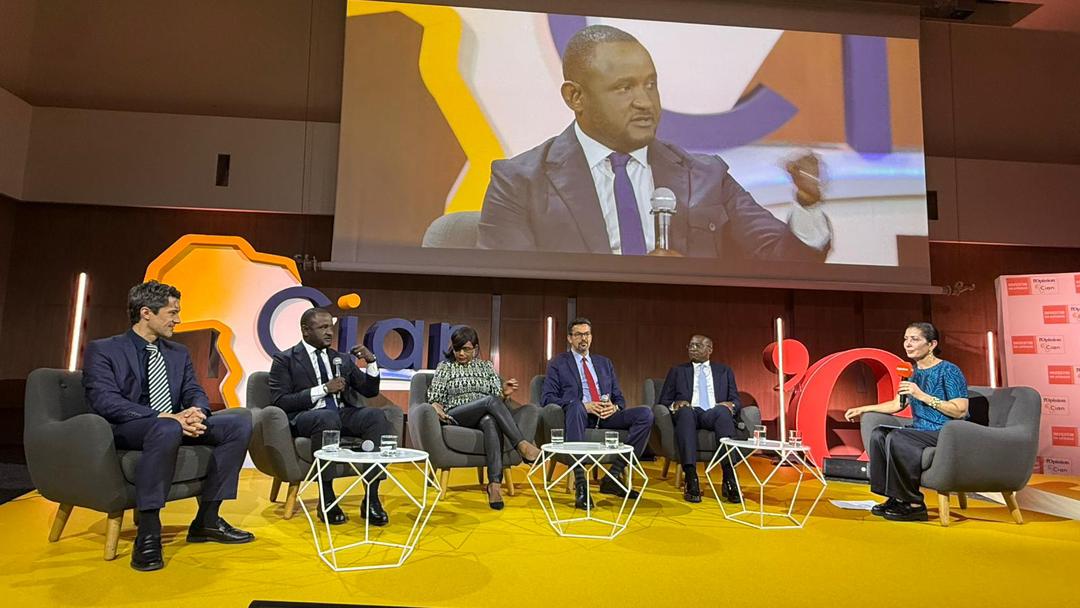
Infrastructure financing is no longer the main issue in Africa. The real challenge lies elsewhere: turning available capital into concrete projects that are delivered and create value. This was one of the key messages delivered by Papa Amadou Sarr, Managing Director of Porteo Group, during his address at the Invest in Africa Forum in Paris on 9 April.
Infrastructure has become a central topic in recent economic discussions about Africa. Roads, logistics corridors, energy, digital networks: all speakers agree on their decisive role in transforming the continent.
There is now broad agreement: infrastructure is not just an asset, it is a structural driver of growth. By facilitating trade, connecting territories and supporting regional integration, it helps accelerate the development of African value chains. Development corridors therefore stand out as strategic priorities, capable of multiplying the economic effects of investment.
But behind this consensus, several limits were clearly identified.
The first concerns financing. While needs remain considerable, the question is no longer only about access to capital. Resources exist, both international and African. However, the cost of capital remains high, largely because risk perception is still unfavourable to the continent.
The second limit relates to project preparation. As several speakers at the Invest in Africa Forum pointed out, the lack of structured, bankable projects is now a major obstacle to mobilising private investors. This preparation gap fuels a vicious circle: high perceived risk, higher financing costs and, ultimately, slower investment.
Against this backdrop, the focus is gradually shifting:
the real challenge is no longer just financing infrastructure, but ensuring that it is actually built and delivers economic impact.
This is precisely where PORTEO Group brings an essential operational perspective.
As an integrated pan-African player, the Group makes a simple point: the value of a project lies not in its financing, but in its ability to be executed and to generate economic activity. This means rethinking the infrastructure value chain, addressing structuring, financing and delivery from the very beginning.
This approach not only reduces the risk perceived by investors, it also turns infrastructure into a real driver of territorial transformation. A road, a bridge or a corridor only achieves its full purpose when it facilitates trade, supports economic activity and creates local jobs.
Beyond financial considerations, this reading points to a broader issue: economic sovereignty.
Infrastructure only has value if it benefits the territories where it is built over the long term. That requires strong local roots and a greater role for African players in designing and delivering projects.
So while the debate on infrastructure financing remains essential, it is moving towards a more fundamental question: how do we move from financed projects to truly transformative ones?
In this context, the emergence of players able to connect strategic vision, financing and execution appears to be a key condition for accelerating the continent’s economic transformation.